
According to the World Meteorological Organization, 2023 through 2025 were the three hottest years on record, and some climate scientists say 2026 could be even hotter. In times of extreme heat, it’s important to know how heat impacts the body and where to get up-to-date information on risk levels where you live.
The Effects of High Heat and Humidity on Your Body
Most of the time, your body compensates for heat by sweating. When the sweat on your skin evaporates, it takes some of the heat from the blood just under your skin with it. As this cooled blood travels through your body, it brings your body temperature down. In times of high heat, however, your body temperature may rise faster than it can cool itself by sweating.
High heat is even more dangerous when combined with high humidity. Humidity is a measure of water vapor in the air. There are two ways to measure it: absolute humidity, or the actual amount of water vapor in the air, and relative humidity, or the amount of water vapor in the air relative to the temperature of the air. When humidity is high, the air is already so saturated with water vapor that the sweat on your skin is less likely to evaporate, inhibiting your body’s ability to cool itself. Your body may also react by producing even more sweat, which can lead to dehydration.
Tracking Heat Risk
Meteorologists use the term “heat index” to refer to the apparent temperature, i.e., what the heat feels like to your body when the effect of humidity is factored in. The chart below can be used to calculate the heat index based on the temperature and the relative humidity. For example, if the temperature is 96 degrees and the relative humidity is 50%, the heat index — how hot it feels to your body — is 108 degrees.
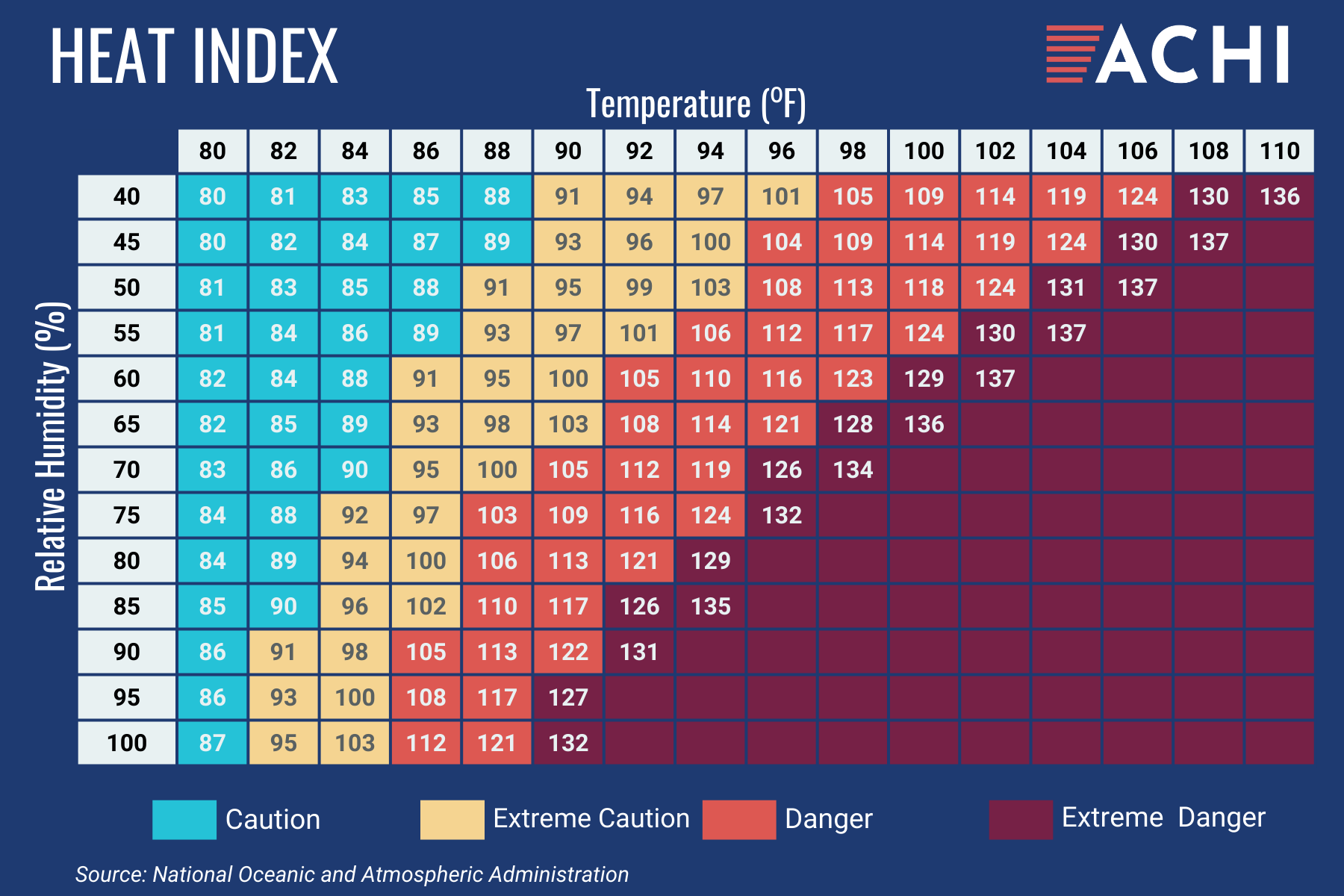
It’s important to note that the values in the chart above are for shady locations. In direct sunlight, the heat index can be up to 15 degrees higher.
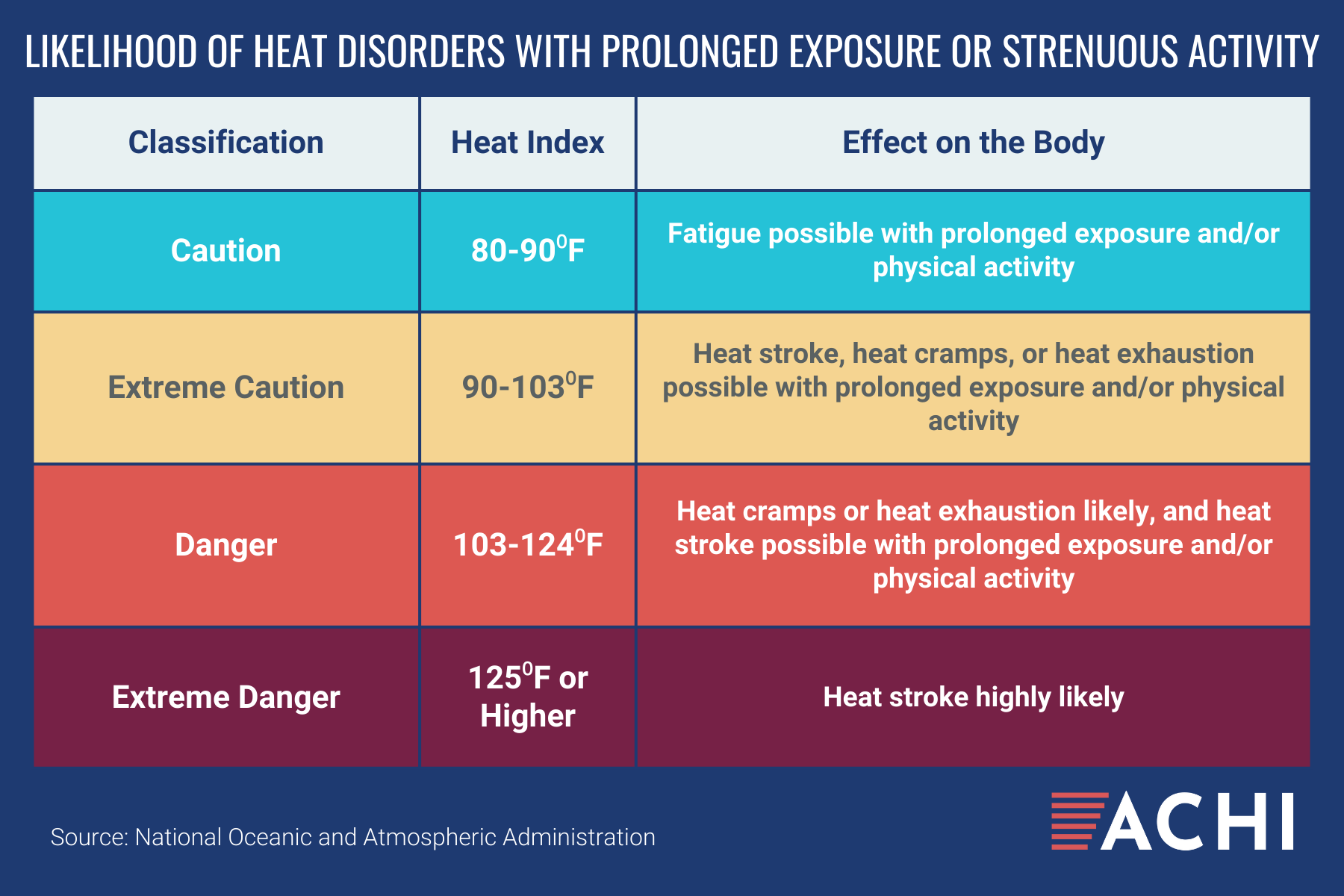
This table shows how different heat indices can affect your body:
The National Weather Service’s website features an interactive, color-coded heat risk map. The map shows not only the current levels of heat risk across the U.S. but also the forecast over several days.
Keeping Safe
According to the Centers for Disease Control and Prevention, certain populations are disproportionately affected by extreme heat. These include:
- Infants and children
- Pregnant women
- People over age 65
- People with disabilities
- People with mental health conditions
- People with chronic health conditions
- People with substance use disorders
- People who lack housing and/or quality housing
- People who lack access to cooling
- People who are socially isolated
- People who breathe polluted air
- People who engage in strenuous outdoor activities, including workers and athletes
Everyone, but especially members of these vulnerable populations, should take precautions against heat-related illnesses when temperatures are high. See our roundup of tips.
For more information:
- Rising Temperatures Increase Risk of Hot Car Deaths
- Tips for Avoiding Heat-Related Illnesses
- How Your Meds Can Change How You Weather the Weather
- Keeping Cool in a Power Outage